
Saturday, July 28, 2012
Escapism
The dish room becomes infinitely more manageable (even enjoyable) when you are not Kat, a minimum-wage college student, but a scullery maid named Beth who's trying to save up enough money to marry the footman.


Friday, July 27, 2012
Be of Good Cheer
There's a saying in the scullery:
"Life is like the PowerSoak.
You never know what will come up next but you know eventually it will hurt."
The scullery isn't a particularly optimistic place.
Thursday, July 26, 2012
All Dolled Up
Here's the thing about my job: on days off, like today, it is so nice to shave and know it matters because my legs won't be covered by baggy checkerboard pants. To do my hair and know I won't ruin it by stuffing it under a baggy black snood. To put on makeup and know it won't be steamed off.
Wednesday, July 25, 2012
Working Woman
So. I have a job. And it has occured to me that I could probably get a whole lot of blogging material out of it. I'm instigating a "Blogging Work" series, a la Kaela's Blogging Basketball/Volleyball Coed. Only I know how busy I am, so each post will probably be very, very short.
Oh, and just so you know: I work at the Cannon Center, which is one of the cafeterias on campus. If you can call it a cafeteria when the food is so darn good.
Oh, and just so you know: I work at the Cannon Center, which is one of the cafeterias on campus. If you can call it a cafeteria when the food is so darn good.
Tuesday, June 5, 2012
Humor Me
I know it's bad form to drop off the face of the planet and then return with something I didn't write specifically for my blog, with no pictures and almost 2000 words. Sorry! This was my Independent Reading project for the last term of AP Lit, and I did it on Beowulf. Don't look at me like that. I think it's interesting and it's my blog. So there. And I would love it if you read it. I really would.
Quote 1:
Hwæt! We Gardena in
geardagum,
þeodcyninga, þrym gefrunon,
hu ða æþelingas ellen fremedon.
þeodcyninga, þrym gefrunon,
hu ða æþelingas ellen fremedon.
Lo, praise of the prowess of
people-kings
of spear-armed Danes, in days long sped,
we have heard, and what honor the athelings won!
of spear-armed Danes, in days long sped,
we have heard, and what honor the athelings won!
(Lines 1-3)
These are the very first lines of the poem. The narrator is
getting the attention of his audience (as the poem was originally entirely
verbal) and introducing them to the beginning of the poem with a history of the
Kings of the Danes.
I chose this quote for a few reasons, none of which actually have
anything to do with the story. I wanted to comment on the really amazing
structure of the original poem. It’s a classical Anglo-Saxon or Old English
poem in the alliterative style. Basically, it doesn’t rhyme but it has a strict
meter with two “halves” per line. In each of the halves there are two strong
downbeats, and at least one of the downbeats in the second half has to be
alliterative with at least one of the downbeats in the first half. Kind of hard
to describe but anyway, you get “Gardena”and “geardagum,”and “theodcyninga” and
“thrym.” It’s incredible in the Old English, but presents a few problems when
translated. Many translating “schools” exist for Beowulf: some
go for flat-out prose, some try to keep the meter intact, and some focus on
alliteration. My personal favorites have a good strong meter and as many
alliterations as possible, but the most important thing is to keep it
understandable and to keep the integrity of the culture from which the poem
sprang. Which is a lot to ask. No wonder there are bad translations out there.
The other point I wanted to make about the original and
translation goes along with that. I think the magic of Beowulf isn’t
merely the story, although that’s all very well and good. It’s the glimpse it
gives us into the people to whom it wasn’t a relic but a well-known story told
around a fire by a respected member of their community. To these people, it was
a time for bonding, for learning, for tradition and pride in their people. The
urgency and rhythm of the original poem is a large part of what portrays that,
and so is incredibly important to preserve. But I don’t know how well it can be
done. With the very first word we run into problems: “Hwæt!” the
speaker proclaims. Literally, this means “What!” But obviously something is
lost in translation. I’ve seen it put down as “Lo,” “Listen,” “Now,” “Hear me,”
“Attend,” “Behold,” “So,” and many other variations. I’m not really sure where
I’m going with this. Maybe I’m suggesting that everyone learn Old English. But
I think mostly what I’m saying is that you have to be careful in picking your
translation, and the translator has to care about the culture and the feel of
the poem, not just the story.
Quote
2:
To the
house the warrior walked apace,
parted from peace; the portal opened,
though with forged bolts fast, when his fists had struck it,
and baleful he burst in his blatant rage,
the house's mouth. All hastily, then,
o'er fair-paved floor the fiend trod on,
ireful he strode; there streamed from his eyes
fearful flashes, like flame to see.
parted from peace; the portal opened,
though with forged bolts fast, when his fists had struck it,
and baleful he burst in his blatant rage,
the house's mouth. All hastily, then,
o'er fair-paved floor the fiend trod on,
ireful he strode; there streamed from his eyes
fearful flashes, like flame to see.
(Lines
720-727)
This
is Grendel’s entrance into Heorot, Hrothgar’s hall. He has come from the wild
moors, angered at the Danes and desiring their deaths. Grendel is a descendent
of Cain, Adam’s son who killed his brother, and the Danes in righteousness have
scorned his lineage. Grendel is determined to kill them and he is not fearful
of this new warrior, Beowulf of whom he has heard.
For
one thing, this is a major point in the story. If you mention Beowulf to a layman, the only thing
they’re likely to know about it (if they know anything) is that he fights a
monster named Grendel. This is also a really cool passage—the whole section has
some excellent imagery. Grendel blasting through the doors without any trouble,
striding over the floors with fire in his eyes, and then falling on the hapless
soldier and devouring him. Good stuff. I’d also like to point out this really
masterful translation: strong meter, strict alliteration, almost word-for-word
inclusion of the original, and it
makes sense. Very, very impressive but unfortunately I can’t find who did it
because I read this version online. The story of this lake monster as a descendent
of a Bible figure is also intriguing to me. It’s an interesting glimpse into
what happens when a pagan society is “converted” to early Christianity.
Quote 3:
Of
Sigemund grew,
when he passed from life, no little praise;
for the doughty-in-combat a dragon killed
that herded the hoard: under hoary rock
the atheling dared the deed alone
fearful quest, nor was Fitela there.
when he passed from life, no little praise;
for the doughty-in-combat a dragon killed
that herded the hoard: under hoary rock
the atheling dared the deed alone
fearful quest, nor was Fitela there.
…
He had of
all heroes the highest renown
among races of men, this refuge-of-warriors,
for deeds of daring that decked his name
since the hand and heart of Heremod
grew slack in battle.
among races of men, this refuge-of-warriors,
for deeds of daring that decked his name
since the hand and heart of Heremod
grew slack in battle.
(Lines
884-889, 898-901)
After
Beowulf slays Grendel, a celebration is held in Heorot. There is a great feast,
the heroes are presented with gifts to show Hrothgar’s gladness, and a bard
comes out to favor the honored guests with fables. Here he tells the tale of
Sigemund, a king of long-ago and a warrior of great renown. A dragon was
guarding a great hoard, and Sigemund defeated it single-handedly.
Can anyone tell me what foreshadowing is? I
mean really. Don’t we read this part later in the story? Can we skip it here?
Aside from that, though, I picked this for another reason. One thing I really
love about Beowulf is all the asides
in the form of other stories. All through the poem other characters come in to
tell their own stories or legends from years past. It’s another glimpse into
the culture, and adds a roundness to the poem that would be missing if it
merely followed Beowulf’s travels.
Quote 4:
“Ne god hafoc
geond sæl swingeð, ne se swifta
mearh
burhstede beateð. Bealocwealm
hafað
fela feorhcynna forð onsended!"
fela feorhcynna forð onsended!"
“No good hawk
now
flies through the hall! Nor horses fleet
stamp in the burgstead! Battle and death
the flower of my race have ripped away."
flies through the hall! Nor horses fleet
stamp in the burgstead! Battle and death
the flower of my race have ripped away."
(Lines
2263-2266)
This is the passage where the
hoard-keeper is quoted. He has watched his entire race be slaughtered, and now
as he buries their treasure all away he mourns their loss and all that once was
and never will be again.
There are many reasons why I
included this quote. First and foremost, I think that this passage is one of
the most beautiful in the entire poem. The man’s emotion, though the grief he
mourns is long past, is still so clearly raw that it touches deep down. The
rhythm of the passage and the wording is so stirring, I think, partly because
he weeps for his lost people and this poem is a glimpse into a lost people:
reading Beowulf, trying to see what
its performers saw, a modern audience can sympathize with the Guardian. A
second reason for this particular bit of his speech is that I made an
incredibly exciting discovery the other day. I was watching the extended
edition of The Two Towers, and it got
to Eowyn’s mourning song at Theodred’s funeral and suddenly it sounded
oh-so-familiar. I’d never been able to quite tell what she was saying before
because of the singing breaking up word structure (I do know a little Old
English, but not enough to recognize words in a song.) So I went and looked up
the lyrics online and sure enough: Bealocwealm
hafað freone freccan forð onsended! A change in conjugation,
that’s all it was: instead of the “flower of my race” being ripped away, it was
“the brave warrior.” Yep. The soundtrack used a quote straight out of Beowulf. The “complete” song also had
the beginning of the passage; it just didn’t make it into the movie. This is
actually really fitting, because Tolkien himself was a professor of Old English
and an expert on Beowulf, and the
influence is clear throughout his works, especially in the Rohirric culture
which is essentially Anglo-saxon. But we really don’t have time to get into
that, so I’ll move on. I also love this passage because it was the first (and,
so far, only) passage of Beowulf I
memorized. In sixth grade for our medieval unit we were supposed to perform a
ballad and I chose the Guardian’s Lament. Proof that I’ve been a nerd for
longer than even I thought.
Quote
5:
Thus made
their mourning the men of Geatland,
for their hero's passing his hearth-companions:
quoth that of all the kings of earth,
of men he was mildest and most beloved,
to his kin the kindest, keenest for praise.
for their hero's passing his hearth-companions:
quoth that of all the kings of earth,
of men he was mildest and most beloved,
to his kin the kindest, keenest for praise.
(Lines
3178-3182)
Here
are the final lines of Beowulf. The
great hero has died, defeating the dragon but defeated by him. He won his
people glory, renown, and at last the hoard of the monster, and though they now
fear being overrun by the enemies Beowulf had held back, they hold a funeral
worthy of their king. His down is raised high on a hill, so that all sailing by
may see it and remember the great ruler. The poem ends as Beowulf’s heorðgeneatas,
the members of his
household, sing his praises.
Once again a glimpse is offered into
the culture of the Geats and the Danes. The seeking of glory and the fight for
your people and for your own praise are prized as much as kindness and
leadership. It was Beowulf’s physical
prowess and might in battle that won him the kingship of the Geats, and he was
loved for it—it is interesting to note that the Old English guðdeað can be translated either as
“good death” or as “battle-death.” To fall in battle is the most glorious and
fitting way for Beowulf the Great to leave his people. “A good king,” he is
called—and here the earlier words of the poet are echoed, when he called both
Hrothgar and Sigemund, in their turn, “good kings.” Thus passes Beowulf.
Saturday, April 14, 2012
Hair Photo A Day 1-10
So there's this hair-themed Photo-a-day challenge that some of my friends are doing. I wasn't going to (too much time commitment), but then I decided, eh, I'll do them a chunk at a time. And yes, there is a reason for this: scroll down! (And sorry for a couple of re-used photos. I'm really, really tired from State Drama.)
1. Hair Self-Portrait. So my face isn't in it. So what? This is supposed to be about hair.

2. Celeb Hair You Love. While this is never, ever, something I could pull off myself, I'm just so impressed by her confidence! And if anyone looks good with short hair, she does.

3. Hair Flashback. This picture was simply too good to pass up, though I'm not the focus. First grade. Short curls.

4. Going-Out Hair. Can't find any good pictures of me, so here's one of my basic style: twist and pin.

5. Hair Color You Adore. I love love love dark brown hair.

6. Your Hair-Do Today. And here we come to why I did this post. I-chopped-off-all-my-hair. Okay, not really, but a good six+ inches are gone, and I love it! I haven't had hair this short since freshman year, and it feels so weird for it to just end. But now it's completely healthy and it curls so nicely and I'm not constantly trying to get it out of my way. Yeah. I love it.

7. Best Hair Moment. Sadly, all my best hair moments seem to be right before to bed or when I'm not going anywhere and are consequently undocumented. I will therefore give you a picture of my most exciting recent hair moment: when I played an astrological adviser at my friend's murder mystery party. (Fine. Not so much a hair moment, but a fun moment nonetheless.)

8. Your Fave Hair-Accessory. Don't even need to think about this one. My pearl circlet made by my darling friend Shaylynn. Go here to buy one of your very own.

9. Straight Hair. It happens occasionally.

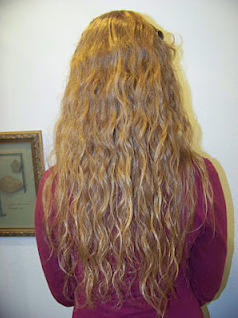
10. Long Hair. Just for comparison so you can see how much is gone.

1. Hair Self-Portrait. So my face isn't in it. So what? This is supposed to be about hair.

2. Celeb Hair You Love. While this is never, ever, something I could pull off myself, I'm just so impressed by her confidence! And if anyone looks good with short hair, she does.

3. Hair Flashback. This picture was simply too good to pass up, though I'm not the focus. First grade. Short curls.

4. Going-Out Hair. Can't find any good pictures of me, so here's one of my basic style: twist and pin.

5. Hair Color You Adore. I love love love dark brown hair.

6. Your Hair-Do Today. And here we come to why I did this post. I-chopped-off-all-my-hair. Okay, not really, but a good six+ inches are gone, and I love it! I haven't had hair this short since freshman year, and it feels so weird for it to just end. But now it's completely healthy and it curls so nicely and I'm not constantly trying to get it out of my way. Yeah. I love it.
7. Best Hair Moment. Sadly, all my best hair moments seem to be right before to bed or when I'm not going anywhere and are consequently undocumented. I will therefore give you a picture of my most exciting recent hair moment: when I played an astrological adviser at my friend's murder mystery party. (Fine. Not so much a hair moment, but a fun moment nonetheless.)

8. Your Fave Hair-Accessory. Don't even need to think about this one. My pearl circlet made by my darling friend Shaylynn. Go here to buy one of your very own.
9. Straight Hair. It happens occasionally.

10. Long Hair. Just for comparison so you can see how much is gone.
~Carrots
Sunday, April 8, 2012
Alleluia, Christ is Risen!
Stake Conference on this beautiful Easter morn was truly glorious. I wish I could just transfer everything we heard straight into your heads, but since I can't I'll leave it to those much more capable than I.
Happy Easter.
He is risen! He is risen!
Tell it out with joyful voice.
He has burst his three days’ prison;
Let the whole wide earth rejoice.
Death is conquered; man is free.
Christ has won the victory.
Come with high and holy hymning;
Chant our Lord’s triumphant lay.
Not one darksome cloud is dimming
Yonder glorious morning ray,
Breaking o’er the purple east,
Symbol of our Easter feast.
He is risen! He is risen!
He hath opened heaven’s gate.
We are free from sin’s dark prison,
Risen to a holier state.
And a brighter Easter beam
On our longing eyes shall stream.
Christ the Lord is ris’n today,
Alleluia!
Sons of men and angels say,
Alleluia!
Raise your joys and triumphs high,
Alleluia!
Sing, ye heav’ns, and earth reply,
Alleluia!
Love’s redeeming work is done,
Alleluia!
Fought the fight, the vict’ry won,
Alleluia!
Jesus’ agony is o’er,
Alleluia!
Darkness veils the earth no more,
Alleluia!
Lives again our glorious King,
Alleluia!
Where, O death, is now thy sting?
Alleluia!
Once he died our souls to save,
Alleluia!
Where thy victory, O grave?
Alleluia!
~Carrots
Subscribe to:
Posts (Atom)